Automating appointment scheduling isn’t just convenient – it’s a smart financial decision. Businesses using appointment automation tools report impressive results like a 300% ROI in the first year, reduced no-show rates by up to 60%, and administrative cost savings of up to 40%. These tools streamline scheduling, improve customer satisfaction, and enable businesses to handle more bookings without adding staff.
Key Takeaways:
- Cost Savings: Automation cuts labor costs by 25–40% and reduces scheduling errors.
- Increased Revenue: Boost booking rates and customer retention, while capturing 24/7 appointments.
- Lower No-Show Rates: Automated reminders cut missed appointments by 50–60%.
- Scalability: Handle higher appointment volumes without additional overhead.
For example, a small business like ABC Marketing Solutions saved 50% of scheduling time and improved customer satisfaction by 20%. Meanwhile, companies like TechStart Solutions achieved 708% ROI by automating over 2,000 monthly appointments. These numbers show that investing in appointment automation pays off quickly and continues to deliver long-term benefits.
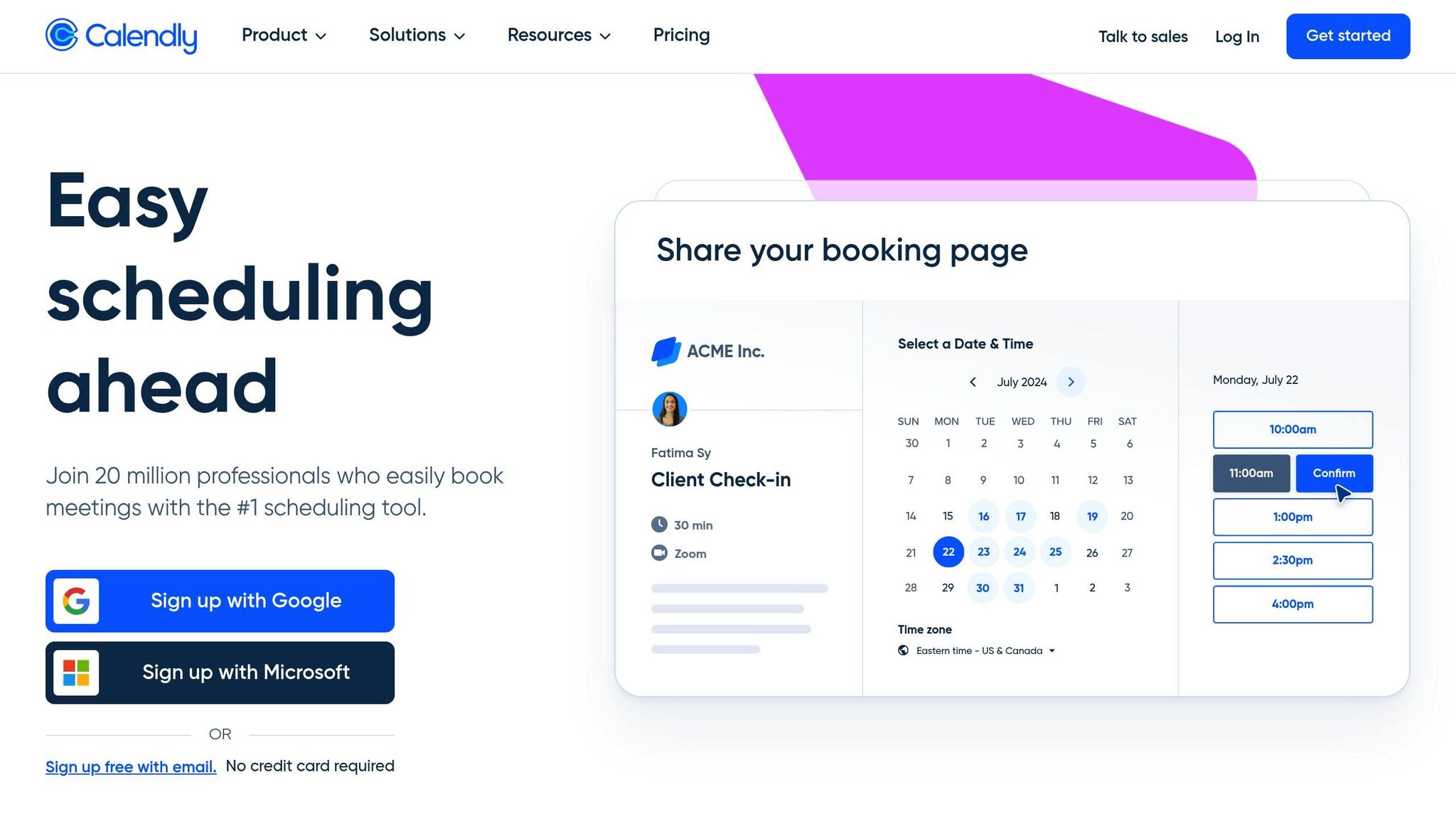
Wealth Management Firm Saves 13K hours and achieves 323% ROI with Calendly
Key Metrics for Calculating ROI
Tracking the right metrics is essential for understanding the ROI of appointment automation. These metrics reveal how automation impacts both financial performance and operational efficiency, providing U.S. businesses with the data they need to evaluate its value. Below, we break down key areas like cost savings, revenue growth, and reductions in no-shows to highlight the tangible benefits.
Cost Savings Through Automation
One of the most immediate benefits of appointment automation is the reduction in labor costs and administrative overhead. By automating manual scheduling tasks, businesses can redirect staff to more productive activities while trimming operational expenses.
Labor cost savings are particularly significant. According to the Institute of RPA, automation can cut labor costs by 25% to 40%. Take the example of a Skypoint Cloud client who spent $70,000 annually on scheduling before switching to an automated system. That’s a substantial cost reduction.
Automation also reduces other overhead expenses, such as phone bills, office supplies, and costs stemming from scheduling errors like double bookings or missed appointments. These inefficiencies are minimized, directly improving profitability.
Beyond cost savings, automation enhances accuracy. Consider a manufacturing company that reduced inspection costs from $100,000 to $50,000 annually while improving its defect detection rate from 85% to 98%. This example shows how automation not only lowers expenses but also improves quality, creating a ripple effect of value.
"Doing more with less means applying technology to amplify what you’re able to do across an organization so you can differentiate and build resilience." – Satya Nadella, CEO of Microsoft
These savings don’t just cut costs – they open up opportunities to reinvest in growth.
Revenue Growth and Increased Bookings
Automation doesn’t just save money; it also drives revenue by increasing booking rates, improving customer retention, and expanding appointment capacity. For service-based businesses, this means serving more clients without hiring additional staff.
Streamlined booking processes enhance the customer experience, making it easier for clients to schedule, reschedule, or cancel appointments. This convenience leads to higher customer satisfaction, repeat business, and positive referrals.
AI-powered tools like conversational chatbots contribute further. Companies using AI for customer service have managed to deflect 64% of inquiries to chatbots, freeing up human agents for complex tasks. Additionally, automated systems operate 24/7, capturing bookings outside regular business hours and boosting revenue.
No-Show Reduction Impact
Reducing no-shows is another critical way automation enhances ROI. Missed appointments represent lost revenue, but automated reminders and confirmations can significantly decrease these occurrences. By recovering this revenue and reducing the administrative hassle of rescheduling, businesses see a direct financial impact.
Personalized reminders are particularly effective. Platforms like Your Lead Matrix use customer data to send targeted reminder sequences, ensuring high attendance rates with minimal manual effort. This not only strengthens customer relationships but also improves operational efficiency, adding to the overall ROI of automation.
Scalability and Efficiency Benefits
As businesses expand, managing appointment scheduling becomes more challenging. Manual scheduling often requires additional staff and resources, which can drive up costs. Appointment automation tackles this issue head-on, enabling companies to grow without a matching increase in expenses. This scalability enhances operational efficiency and strengthens the return on investment (ROI) of automation.
The value of scalability becomes clear when automation is used to handle growth-related pressures. As Emily Hill points out:
"When you utilize automation, you’re not only saving time but also minimizing errors that can occur with manual processes. This technology means you can reallocate resources to strategic activities, which is crucial for sustainable growth."
Managing Higher Appointment Volumes
Automation makes it possible for businesses to handle rising customer demand without needing to hire more staff. AI-driven systems can process thousands of interactions simultaneously, ensuring every booking request is addressed.
Take Berkeley Rec Sports and the Okaloosa County Clerk of Court as examples. Both organizations reduced wait times and improved customer satisfaction by implementing automated scheduling systems. In the healthcare industry, DocPlanner provides another striking example. By automating the integration of its legacy electronic health record systems with its application, the company achieved notable results: a 3% boost in sales conversion rates, $150,000 in annual savings during its initial rollout, twice the process speed, and daily use by over 500 clinicians.
Additionally, automation operates 24/7. While employees typically work standard hours, these systems ensure bookings can be made anytime, increasing appointment availability without adding labor costs.
Reducing Administrative Tasks
Automation doesn’t just handle higher appointment volumes – it also simplifies routine administrative tasks. This efficiency is another key driver of automation’s ROI. For example, when patients self-schedule, staff save about eight minutes per visit, which adds up to significant time savings across hundreds or thousands of appointments each month.
Call centers also benefit immensely. Companies using automation have seen call handle times drop by 20% and call volumes decrease by 18%. This allows staff to focus on more complex tasks, maintaining high service quality even during busy periods. As a result, businesses gain more predictable operational costs and consistent service delivery.
These advancements in scalability and efficiency underscore the value of investing in appointment automation. Your Lead Matrix is a prime example of how automation can transform scheduling. The platform simplifies appointment management by automating scheduling, follow-ups, and customer engagement. Through personalized reminders and confirmations, it helps businesses reduce no-shows, improve customer satisfaction, and manage growth effectively.
sbb-itb-4c38b13
Industry Data and Research Findings
Data from various industries highlights how appointment automation drives higher revenue, cuts costs, and improves overall efficiency.
ROI Statistics from Case Studies
Across industries, appointment automation consistently delivers impressive returns. For example, Urozen Clinic saw bookings jump by 120% and no-shows drop by 50% after implementing an AI-powered concierge system. This five-week initiative cost $8,000 but delivered a staggering 560% ROI.
TechStart Solutions experienced a 300% boost in lead conversion rates by automating over 2,000 appointments monthly. Their three-month implementation, which cost $15,000, resulted in a 708% ROI. Sarah Johnson, Operations Manager at TechStart Solutions, remarked:
"FlowIntelli transformed our lead qualification process. The AI agent books 10x more meetings than our previous system."
At GrowthLab Marketing, automation reduced administrative workload by 80% and increased team productivity by 150%. The company saved 40 hours per week, and their $12,000 six-week implementation achieved a 425% ROI. Michael Chen, Founder & CEO of GrowthLab Marketing, shared:
"The automation FlowIntelli built eliminated 90% of our manual data entry. Complete game-changer."
Walmart also saw remarkable results, with AI-driven email personalization increasing conversions by 215%, click-through rates by 13%, and revenue by 41%. These efforts delivered a 320% higher ROI compared to manual campaigns.
Other industries have seen similar success. A telecom company saved $4.2 million annually for every $1 million invested by automating 70% of incoming queries. Meanwhile, a healthcare clinic reduced administrative time by 40%, increased patient volume by 12%, and saved $10 million annually by automating paperwork with AI agents.
Before and After Comparison Results
Case studies provide a clear picture of how automation transforms key operational metrics. For instance, businesses without automated reminders often face no-show rates of 15-30%, with some healthcare practices reaching as high as 50%. Administrative staff can spend over five hours weekly managing appointments manually.
| Metric | Before Automation | After Automation | Improvement |
|---|---|---|---|
| No-Show Rate | 15-30% (up to 50% in healthcare) | 10-15% average | 50-60% reduction |
| Admin Time (Weekly) | 5+ hours | 1-2 hours | 60-80% reduction |
| Booking Rate | Baseline | 120% increase (Urozen) | Varies by industry |
| Lead Conversion | Baseline | 300% increase (TechStart) | Significant improvement |
| Email Open Rates | Standard rates | 52% higher with automation | Substantial increase |
| Click-Through Rates | Manual campaign rates | 332% higher with automation | Major improvement |
The financial impact is undeniable. For example, a small medical office preventing just four no-shows per week at $150 per appointment could generate an extra $2,400 in monthly revenue. Larger practices or multi-location businesses see even greater savings as these benefits scale.
Spanish55 demonstrated the power of even basic automation by reducing no-show rates with appointment reminders. Their results echo broader trends showing that automated processes can save businesses 15-20 hours weekly and reduce manual data entry by 90%.
AI-based scheduling tools take this a step further, reducing no-shows by 60% through automated reminders and predictive analytics. These benefits directly protect revenue and cut operational costs, making automation an increasingly attractive investment for businesses.
Platforms like Your Lead Matrix exemplify these advantages, offering personalized reminders and confirmations that help businesses maximize bookings and minimize no-shows. By leveraging intelligent automation, companies can achieve results similar to those highlighted in these case studies.
Features That Drive ROI
The features of appointment automation systems play a big role in determining how much return on investment (ROI) they deliver. By understanding which capabilities provide the most value, businesses can make smarter choices and get the most out of their automation tools.
Automated Reminders and Confirmations
Sending reminders through multiple channels is a key feature of appointment automation. Text messages are especially effective, boasting open rates of about 98% and response rates between 97% and 99%. Compare that to traditional phone calls, which only manage to reach 30% to 60% of recipients.
Automated reminders are also far more cost-efficient. They cost around 75% less per contact than manual calls, and in some cases, they’re six times cheaper. For example, a healthcare provider handling 200–300 appointments daily reduced no-show rates from 35% to just 6%, resulting in an annual ROI of $5.2 million.
Timing and frequency matter, too. Staggered communications – like sending an email five days before, a phone call three days ahead, and a text message the day before – help reach customers with different preferences.
One dental clinic highlighted the power of automated SMS reminders. They cut missed appointments from 15% to 5% in just one month and saw a 30% boost in confirmations by personalizing messages with client names and appointment details.
"Today’s patients expect appointment reminders through telephone calls or texts prior to their appointment. After all, automated appointment reminders have become the norm for almost every service industry. Most healthcare organizations have transitioned to appointment reminders via text messaging, which is even more efficient and effective than voice messaging."
- Nick A. Fabrizio, PhD, FACMPE, FACHE, Principal, MGMA Consulting
In addition to reminders, personalized follow-ups further enhance customer engagement.
Personalized Follow-Up Messages
Adding a personal touch to follow-up messages increases customer engagement and encourages repeat bookings. These messages often include specific appointment details or service history tailored to the individual.
Personalized texts are particularly effective, with 95% of messages being read and responded to within three minutes. For instance, a wellness center cut its no-show rate by 50% after introducing automated reminders via text and email.
Automation doesn’t stop at reminders. Post-appointment follow-ups, like satisfaction surveys, rebooking prompts, and promotional offers, keep customers engaged between visits and create opportunities for additional revenue. These timely, customized messages enhance customer retention and overall lifetime value.
When paired with existing customer data, these personalized interactions become even more impactful, boosting both efficiency and ROI.
Customer List Integration
Seamless integration with customer data is another feature that drives ROI. By connecting appointment automation tools to customer relationship management (CRM) systems, businesses can centralize all interactions – from booking details to communication preferences – making them more accessible and actionable.
CRM integration also automates customer record updates and enables targeted promotions based on service history. This approach not only improves service quality but also increases customer satisfaction.
As businesses grow, integrated systems become even more valuable. They can handle higher appointment volumes without adding to administrative burdens. For example, Your Lead Matrix offers seamless integration with existing customer lists, helping businesses maximize bookings from current clients while efficiently managing new leads.
Custom field mapping takes this a step further by tracking customer preferences and streamlining operations. With fewer administrative errors and better use of customer data, every interaction directly contributes to improving ROI.
Conclusion: Getting the Most ROI from Appointment Automation
The numbers don’t lie – appointment automation is reshaping how businesses operate, delivering real financial and operational advantages. For example, automated reminders alone can cut no-shows by 35%, while robust scheduling systems can boost revenue by 25%. These aren’t just minor improvements; they’re measurable shifts that impact the bottom line across industries.
Automation doesn’t just save money; it drives revenue. Pre-booked customers, for instance, spend 7–8 times more than walk-ins. Add to that the 15% increase in repeat bookings that data-driven insights can achieve, and the case for automation becomes even stronger. When you factor in the revenue lost to no-shows, it’s clear that automation isn’t just helpful – it’s essential.
"In a world where customers demand personalized, omnichannel experiences, scheduling tools aren’t just nice to have – they’re business-critical." – JRNI
Operational efficiency is another standout benefit. Businesses can reclaim up to 40% of the time spent on manual scheduling, while appointment confirmation rates improve by 25%. This frees up staff to focus on tasks that directly drive revenue, rather than getting bogged down in administrative work.
Technology is the linchpin here. Tools like Your Lead Matrix show how modern appointment systems integrate seamlessly with existing customer data. Features like personalized reminders, intelligent follow-ups, and automated scheduling workflows ensure businesses can maximize bookings from both current clients and new leads – all without adding extra administrative strain.
Scalability is another major win. With 78% of business leaders citing increased productivity from task automation, businesses can handle growing appointment volumes without needing to expand their teams. Real-time calendar syncing has also reduced appointment conflicts by 30% and boosted customer satisfaction by 25%.
For businesses ready to embrace automation, the rewards are clear: immediate cost savings, increased revenue, and improved efficiency. With 90% of financial institutions using online appointment tools reporting growth in new accounts and balances, the question isn’t whether to automate – it’s how soon you can start reaping the benefits. Appointment automation isn’t just a tool; it’s a strategy for long-term success in a competitive marketplace.
FAQs
How does appointment automation help reduce no-shows, and what financial benefits does this bring to businesses?
Appointment automation plays a key role in cutting down no-shows by sending personalized, automated reminders and confirmations to clients. These reminders help customers stay on top of their schedules and be ready for their appointments, which dramatically reduces the chances of missed bookings. In fact, research shows that automated reminders can lower no-show rates by anywhere from 38% to 79%, depending on the industry.
Fewer no-shows mean more than just filled time slots – it directly impacts a business’s bottom line by reclaiming revenue that would otherwise be lost. This not only improves cash flow but also creates a better experience for customers by making scheduling more seamless. Over time, businesses can enjoy increased profitability and greater efficiency through the use of automation.
What are the key features of appointment automation that deliver strong ROI, and how can businesses make the most of them?
Appointment automation systems come with a range of features that can significantly improve efficiency and profitability. Here are some standout benefits:
- Automated reminders and notifications: These help cut down on no-shows while keeping customers informed and engaged.
- Calendar synchronization: Ensures smooth scheduling by preventing double bookings and streamlining the process.
- Personalized communication: Builds stronger customer relationships by tailoring messages to individual preferences.
- Streamlined follow-up workflows: Makes it easier to reconnect with leads and encourage more bookings.
To get the most out of these systems, businesses should focus on crafting messages that resonate with their audience, sending reminders at the right time, and leveraging data to fine-tune their scheduling processes. These steps not only improve operational efficiency but also elevate customer satisfaction and drive revenue growth.
Can appointment automation systems work with existing CRM tools, and what advantages does this integration provide?
Yes, appointment automation systems often work effortlessly with existing customer relationship management (CRM) tools. This connection helps businesses bring all their customer data into one place, making scheduling easier and follow-ups more efficient – all directly within the CRM.
By linking appointment automation to your CRM, you can save time, cut down on manual data entry, and create a smoother experience for customers. Some standout perks include real-time updates, customized reminders, and improved tracking of customer interactions. Together, these features can help boost bookings and minimize no-shows.
